






Music Piano 7: Rush Song Games review
 Analysis by GetAllApps
I like rhythm games that make sense within seconds but still give me a reason to try again after a missed note. Music Piano 7: Rush Song Games is built around that quick appeal: tap along to music, keep your timing steady, and see how far you can go. It is a music game from Melodya Muses, and its focus is straightforward rather than a deep music-making or piano-learning experience. For a short break, that simplicity is a strength; for someone seeking structured lessons or precise instrument practice, it is a different proposition.
From the first tap to a playable rhythm
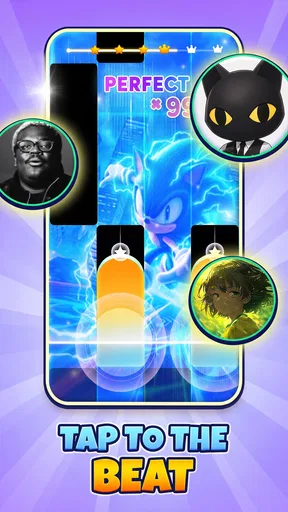
The basic idea is easy to grasp: follow the notes on screen and tap in time. That makes the first minute approachable even if you have never played a piano-tile game. You do not need to know music theory, read sheet music, or learn a complicated control scheme before starting. The challenge is in responding consistently as the song moves forward, not in figuring out what the game wants from you.
That low barrier suits brief, everyday moments. I can imagine opening it while waiting for a ride or taking a short pause between tasks, playing a run, and putting the phone away without needing to settle into a long session. The music-game format also makes it more engaging than simply listening to a track: the song becomes a prompt for action, and each tap asks for attention.
The title points toward a mix that includes K-pop and EDM, while the game’s core remains the familiar piano-tile rhythm challenge. That combination will appeal most to players who enjoy energetic songs and quick reactions. It is less suited to anyone expecting a broad music library across every genre or a realistic piano keyboard. I would approach it as an arcade game with musical timing, not as a substitute for playing an instrument.
The game is free, which makes it easy to try without committing to a purchase. It is rated Everyone, and its audience can reasonably include casual players as well as people who already enjoy rhythm games. That said, a simple premise does not mean every run feels effortless: keeping pace is the point, and a lapse in attention can quickly break the flow.
Why the opening feels accessible
In a music game with complex menus or unfamiliar controls, the setup can become a chore before the fun begins. Here, the tile-tapping premise gives a new player an immediate job. My practical advice is to begin with your attention on the screen rather than trying to play while multitasking. The game’s appeal depends on noticing the next cue in time; glancing away to answer a message is exactly the kind of interruption that can turn a smooth run into a restart.
It also helps to treat the first few attempts as a warm-up rather than a test of skill. A rhythm game asks for a blend of listening, seeing, and reacting, and those signals can take a little time to settle into a comfortable pattern. If your first run feels messy, a short retry is more useful than tapping faster in a panic. Accuracy and composure matter more than frantic movement.
How the rhythm gives feedback
The central feedback is immediate: a tap either keeps you aligned with the moving sequence or disrupts your run. That direct connection between action and result is what makes these games satisfying. You are not waiting for a long animation or a delayed score screen to learn whether you kept up; the next moment of play quickly tells you whether your timing is holding.
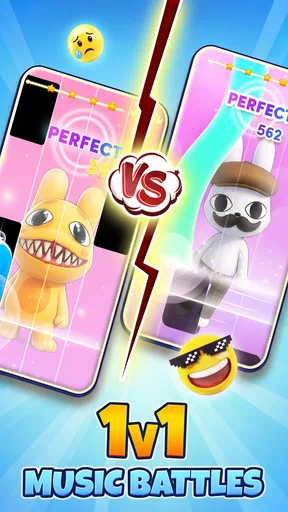
This also creates a useful distinction between a rhythm game and a conventional music player. Listening is passive, while this game asks you to anticipate and respond. Compared with a rhythm title built around elaborate instruments or many kinds of input, piano-tile play keeps the physical action simple. That makes it easier to pick up on a phone, but it also means the challenge comes from the pace and consistency of tapping rather than from mastering a complicated control layout.
For a more comfortable run, I recommend holding the phone securely and using whichever tapping position feels natural instead of stretching to reach across the screen. Small adjustments to grip can matter when a sequence becomes busy. If you tend to play one-handed, consider whether that posture stays comfortable; the game rewards quick reactions, and awkward thumb movement can become its own obstacle.
Sound is part of the experience, but the visual sequence still matters. In a noisy place, relying only on the music may make the game harder to follow, while playing with sound very low can reduce the sense of musical timing. A quiet setting and a moderate volume are a sensible starting point. If you are playing somewhere you need to stay aware of your surroundings, keep the sound low and avoid letting the screen absorb your attention.
The small reward that starts another run
The reward in this style of game is not a complex story payoff; it is the feeling of holding a rhythm for longer and doing better on the next attempt. A successful stretch feels satisfying because each tap contributes to it. When a run breaks, the missed moment is easy to identify, so the next attempt has a clear purpose: stay calmer, pay closer attention, or respond more cleanly.
That is the loop’s strongest point. The game gives you an immediate action, quick feedback, and a modest personal goal. A player can finish a run and decide to stop, but the obvious opportunity to improve makes another session tempting. I find that more appealing than a game that demands a lengthy commitment just to make progress.
There is a trade-off, though. A retry loop can feel repetitive if you are not interested in improving your timing or revisiting songs. The same basic action remains central, so players who want exploration, character development, or a changing set of mechanics may lose interest. This is best enjoyed when the appeal of rhythm itself is enough to carry repeated attempts.
Offline play and practical expectations
The game is presented as suitable for offline rhythm play, which is useful when a connection is unavailable or you want a quick distraction during travel. I would still make a simple check before relying on it: open the game while connected, then try it in the kind of offline situation where you expect to use it. That is a practical way to know whether your preferred routine works, rather than discovering a limitation when you are already on the move.
For travel, the best use case is a short stretch when you can look at the screen and tap comfortably. It is not a good choice while walking through a crowded area, crossing a street, or doing anything that needs your eyes and hands. Offline availability makes the game convenient, but it does not make distracted play safe.
One useful way to keep sessions enjoyable is to set a personal stopping point before you start, such as playing until you complete a clean run or until your break ends. Because the next attempt is always easy to imagine, it is simple to keep going longer than planned. A small boundary helps preserve the game as a quick pastime instead of letting the restart loop consume the whole break.
Where it fits among music games
Among mobile music games, this one sits on the accessible, tap-focused side. A piano-tile format is easier to understand than games that ask you to learn several input patterns, and it is more hands-on than a music app that only plays songs. That makes it a reasonable middle ground for someone who wants to interact with music without taking on a serious practice routine.
It is not the right alternative to a piano-learning app if your goal is to improve technique, understand notes, or build disciplined practice habits. Nor would I choose it over a more involved rhythm game if I wanted deeper control variety or a broader sense of progression. Its strongest use is as a compact reaction game with a musical frame, not as a complete music education tool or a large-scale rhythm experience.
The audience response is substantial: it holds an average rating of 4.8 from around 472,000 ratings, and it has passed 50 million installs. Those figures suggest that the accessible loop has found a wide audience, but they should not decide the question for you. The more useful test is whether you enjoy repeating a short, timing-focused challenge and whether the available musical style matches your taste.
When the restart is a feature—and when it is friction
A restart feels rewarding when I can name the mistake and try a different approach. It feels less rewarding when I am tapping without a clear sense of the rhythm or when the same pattern has stopped being interesting. If you notice that you are reacting with tension rather than settling into the music, pause for a moment. Returning with a calmer grip and a little more attention is often a better plan than immediately launching another run.
Version 3.10.0 is the current release, and the game supports Android 7.0 and later. That is useful to know if you are checking whether an older Android device can run it. On a phone with a small screen, it is also worth trying a brief session before deciding whether the tiles feel comfortable to follow. The right fit depends partly on how clearly you can see the sequence and tap without covering too much of it with your hand.
Because it is free, the commitment to try it is low, but the time commitment can grow through repeated attempts. I would skip it if I wanted a calm, hands-off listening experience, a realistic keyboard, or a carefully structured lesson plan. I would also look elsewhere if repeated tapping is uncomfortable. For a player who likes quick challenges and can enjoy improvement in small steps, those limitations are easier to accept.
My verdict on the play-again loop
Music Piano 7: Rush Song Games works best when I treat it as a compact rhythm challenge: start quickly, focus on the cues, learn from a missed tap, and decide whether another run sounds fun. Its accessibility is real, but so is its narrow focus. The game does not need a complicated premise to deliver a satisfying break; it needs you to enjoy listening, watching, and reacting over and over.
Melodya Muses has made a free music game with broad appeal, an Everyone age rating, and a straightforward action that suits short sessions. I would recommend it to casual players who enjoy K-pop or EDM-flavored rhythm play and want something more interactive than listening to music. If you want deep progression, instrument skills, or a wide range of mechanics, a different kind of music game will likely suit you better. If a quick run and the chance to improve are enough to make you tap “try again,” this one is easy to understand and worth giving a go.
Pros and cons
Pros
- Quick tap-based play makes it easy to start a song.
- Short rounds suit brief play sessions.
- Song choices offer variety across play sessions.
- Visual cues help guide timing during songs.
- The game is accessible to players without piano experience.
Cons
- Fast sections can feel difficult for new players.
- Success depends on precise taps and steady timing.
- Repeated play may make some songs feel familiar.
- A small screen can make rapid taps less comfortable.
- The experience may feel less rewarding for players seeking realistic piano lessons.


